
Saliva crystals are a window into your cycle.
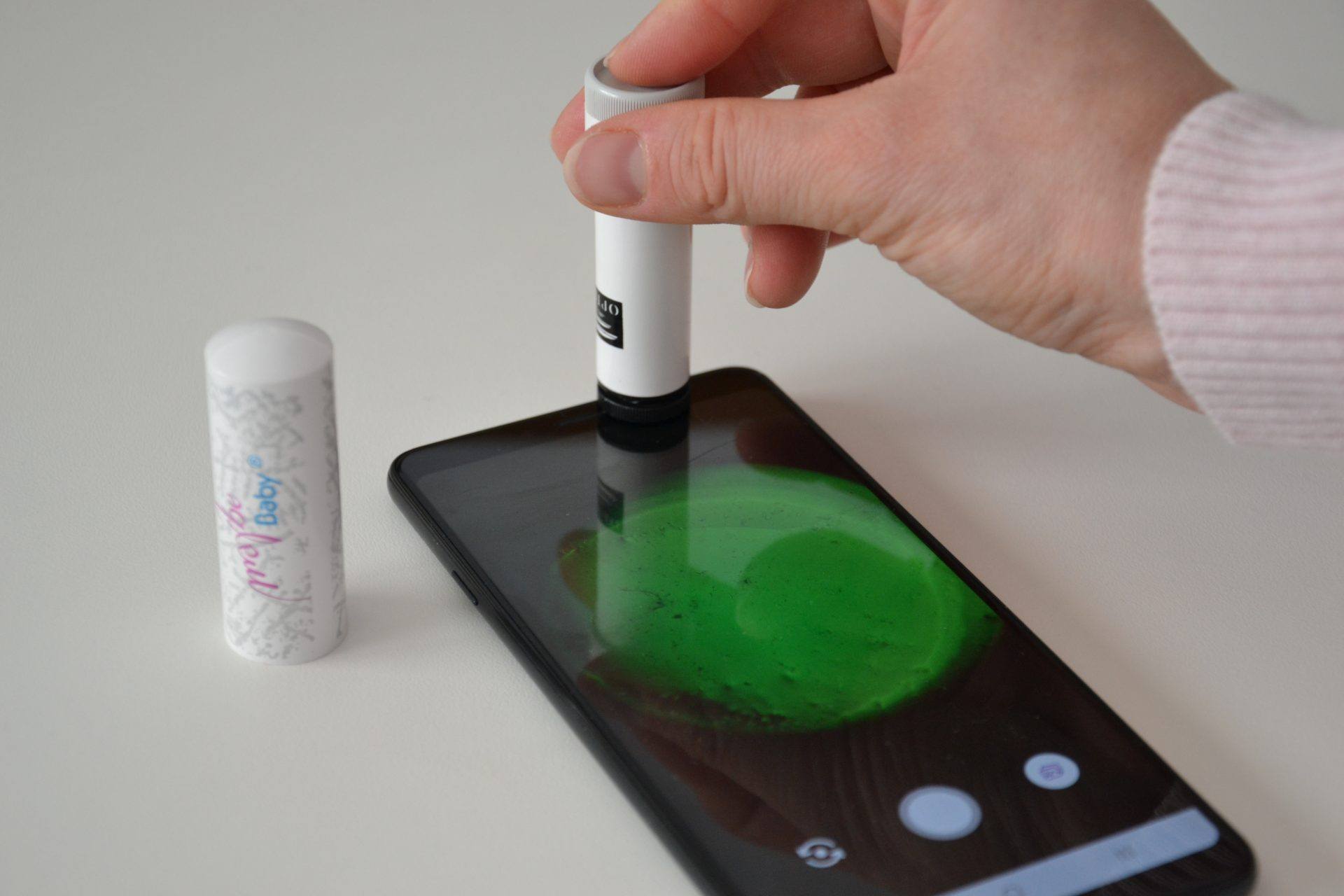
In the days before ovulation, estrogen levels rise. That estrogen changes the composition of cervical mucus — and of saliva — so that when it dries, salts and proteins arrange themselves into fern-shaped crystals.
Once ovulation passes and progesterone takes over, the ferning stops. The pattern that appears each morning is a direct, non-invasive read on where you are in your cycle.
Conception is not the same as pregnancy.
The figures below come from studies that looked at cycles where the couple had intercourse only once during the 6-day fertile window. Each point shows the probability for that single act of intercourse on that day.
Fertilisation can only happen once the egg is released — at ovulation. But the probability that a cycle ends in a clinical, ongoing pregnancy peaks 1–2 days earlier. Many conceptions around ovulation day are lost very early; the embryos that implant and grow tend to come from intercourse a couple of days before.
The 2018 Harvard study.
Harvard Medical School researchers evaluated automated detection of saliva ferning — the same approach Babyndex uses — and found it predicted ovulation with greater than 99% accuracy.
Read the study →Patented method and device.
The underlying method and device for predicting and testing physiological conditions of a female mammal using saliva crystal analysis is protected by United States Patent US 11,583,260.