
01
Microscope
Apply a tiny saliva sample to the lens and let it dry. Saliva crystallises as you enter your fertile window.


Babyndex pairs a reusable pocket microscope with a mobile app that reads the fern-like crystal patterns in your saliva — so you know your fertile window, not just the day of ovulation.
The app is under development and is intended for informational purposes only, not as a medical device.
Pregnancy is 3–5× more likely when intercourse happens 2 days before ovulation than on the day itself. Most tests tell you ovulation is happening — by then, the most fertile window is already closing.
Saliva starts to crystallise as estrogen rises in the days leading up to ovulation. Babyndex catches that signal early.
A legtöbb ovulációs teszt azt mondja, hogy „most termékeny vagy”. De a fogamzás és a klinikai terhesség nem ugyanaz.
A kutatások szerint a fogamzás esélye az utolsó 3 termékeny napon hasonló. Azonban a tüszőrepedés előtt 2 nappal történt fogamzás 3–5-ször nagyobb eséllyel vezet klinikai terhességhez, mint a tüszőrepedés napján történt fogamzás.
akár 5 nap
A spermiumok életképesek maradhatnak
12–24 óra
A petesejt élettartama a tüszőrepedés után
Ezért a legjobb esély akkor van, ha a spermiumok már várnak a petesejtre.
A tüszőrepedés előtti kb. 24–36 órában induló LH-csúcsot mutatja ki. Az LH azonban a vizeletből csak később — jellemzően 6–12 órával később — mutatható ki. Így a pozitív teszt gyakran a termékeny ablak későbbi szakaszára esik, amikor a legjobb napok (különösen a −2. nap) már részben vagy teljesen elmúltak.
A nyál kristályosodása (ferning) az ösztrogén emelkedését jelzi, ami korábban kezdődik. Ezért mutathatja meg a termékeny ablak elejét, nem csak a végét.
−3, −2
Legjobb esély klinikai terhességre
−1
Magas fogamzási esély
0 · tüszőrepedés
Fogamzás lehetséges, de kisebb esély klinikai terhességhez
A cél nem az, hogy pontosan egy napot találj el, hanem hogy a termékeny ablak elején és közepén legyél aktív — nem csak akkor, amikor az LH-teszt már pozitív.
Three small things, working together every morning.
Apply a tiny saliva sample to the lens and let it dry. Saliva crystallises as you enter your fertile window.

Hold the microscope against your phone camera and take a photo. The app recognises the crystal patterns.
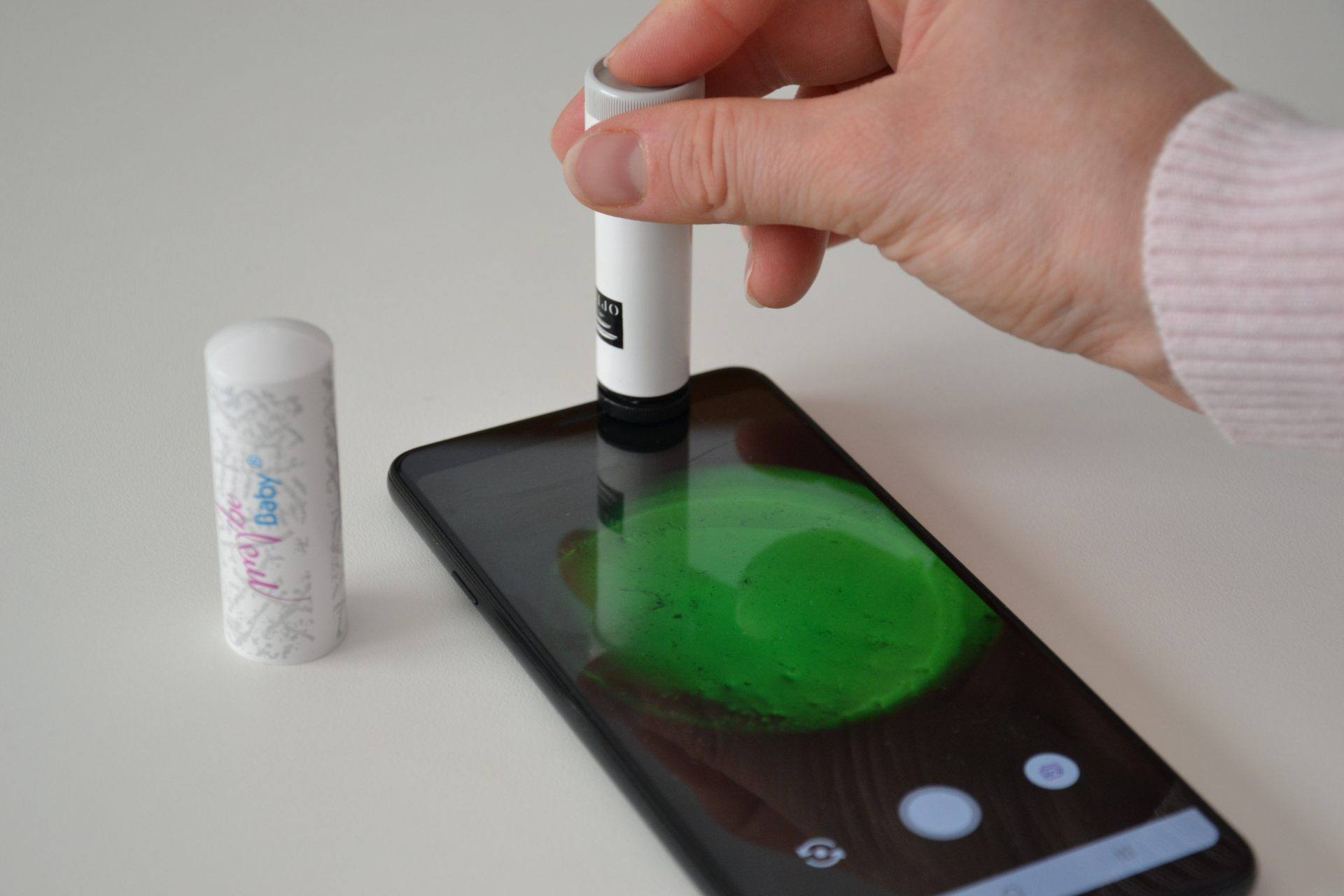
Our algorithm scores the patterns and shows the days with the highest chance of getting pregnant.
Saliva crystallises on your real fertile days — works even with irregular cycles, no months of temperature data required.
A 2018 Harvard Medical School study found automated saliva crystal detection predicts ovulation with over 99% accuracy.
The microscope is reusable — use it as many times as you want. More sustainable than single-use hormone strips.
Our most-read posts on ovulation and the fertile window.
Cycle length varies, and so does ovulation. Learn how to pinpoint your ovulation day.
The fertile window is short — and the days before ovulation matter most.
How LH strips, basal body temperature, and saliva tests compare — and which works best for regular vs irregular cycles.
A short walkthrough of the daily saliva test and how the app reads the pattern.
What dots, lines, and full ferns mean — and how the app removes the guesswork.
A quick check before you start.
The test relies on pre-ovulatory estrogen. Hormonal contraceptives suppress that signal, so it only works if you are not using them.
With PCOS, saliva patterns may look different, but the test can still show your actual fertile days. Try it for a full cycle.
Unlike LH strips or temperature tracking, saliva crystals show the real fertile window as it happens — no perfect cycle needed.
If it doesn't work for you, send the microscope back and we'll refund its price.